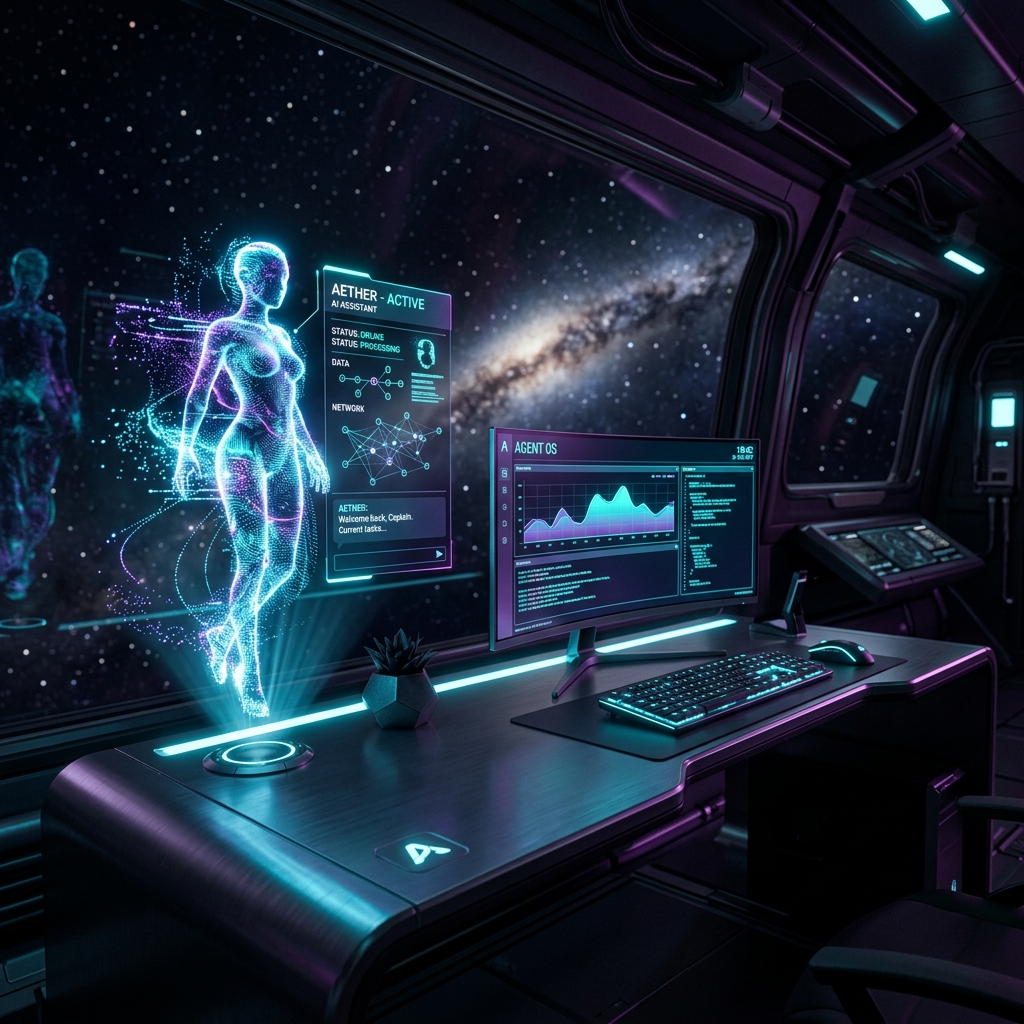
An AI employee is a custom-built autonomous AI worker that performs business tasks 24/7. Unlike a chatbot, it completes multi-step missions without supervision — it reads your documents, uses your tools, makes decisions, and reports outcomes like a human hire would.
In 2026, "AI employee" stopped being a metaphor. The combination of capable models, tool use, and frameworks like Claude Cowork Skills means software can now hold a role — not just answer a question. For Indian businesses staring at rising salaries and thin margins, that shift is the whole game.
What is an AI employee, exactly?
An AI employee is software configured to do a specific job inside your business. It has a defined role, access to the tools that role needs, and the autonomy to complete tasks end-to-end. You brief it the way you'd brief a new hire, and it works on your behalf — continuously, without breaks.
The key word is autonomous. A traditional automation runs one fixed path. An AI employee decides how to get the outcome: which document to read, which tool to call, when to escalate to a human. That flexibility is what makes it feel like staff rather than a script.
A chatbot answers questions. An AI employee gets the job done — and tells you when it's finished.
How is an AI employee different from a chatbot, SaaS, or RPA?
This is the question that clears up most confusion. Each tool solves a different layer of the problem:
- Chatbot: answers questions from a script or knowledge base. It reacts; it doesn't do work.
- SaaS tool: gives a human a dashboard to do work faster. The human is still the worker.
- RPA (robotic process automation): repeats one rigid, pre-recorded sequence. It breaks the moment the screen changes.
- AI employee: owns an outcome. It adapts its steps, uses judgement, and handles the messy middle that scripts can't.
We go deeper on this in AI Employee vs Chatbot vs Automation, but the short version is: an AI employee is the evolution, not a competitor, of the tools you already use.
The three types of AI employees
At Orbit Intelligence we build three classes of AI employee, because most business work falls into three shapes:
- Cowork Specialists — white-collar AI built on Claude Cowork Skills. Analysts, ops managers, and document processors that read, reason, and report.
- OpenClaw Agents — autonomous agents that run multi-step missions: research, lead generation, monitoring, outreach.
- 24/7 AI Workforce — always-on operational workers: WhatsApp support, system monitoring, appointment booking.
How much does an AI employee cost versus a human?
A mid-level Indian hire costs ₹6–10 lakh a year once you add salary, benefits, hardware, and management time — and takes months to become productive. An AI employee starts at a one-time ₹5,000, works 24/7, and ramps in days. It doesn't take leave, doesn't churn, and doesn't need a desk.
That doesn't mean AI replaces your team — it means your team stops doing the repetitive, after-hours, and high-volume work that burns people out. For the full math, see How Much Does It Cost to Hire an AI Employee in India?.
Who should hire an AI employee?
- Founders drowning in operational work they can't afford to staff for.
- Businesses losing customers to slow or after-hours response times.
- Teams doing high-volume document, data, or research work by hand.
- Anyone who needs a process to run reliably while they sleep.
How do you get started?
Deployment is fast: a 30-minute discovery call, a custom design, and a live AI employee in about 7 days. If you've been quietly wondering whether half your team's busywork could just… run itself — it can. Book a discovery call and we'll show you what's possible for your business.